What AI Infrastructure Lobbyists Are Fighting Over
Federal lobbying filings mentioning "data center" grew 7x between 2021 and 2025, from 42 to 298. The issues cluster into four policy fights: who pays for grid upgrades, permitting speed, tax treatment, and energy and environmental rules. The state-level fight is just as intense, with Virginia, Georgia, Texas, California, and Florida running parallel lobbying campaigns over tax exemptions, rate cases, and potential moratoriums. Local opposition has blocked or delayed $64 billion in projects across 24 states.
Filings grew 7x in five years
Companies hire lobbyists, usually well-connected lawyers who approach legislators to advocate on behalf of their clients.
Lobbyists must register and file quarterly, disclosing their client, the specific issues being lobbied on, the government entities contacted, and the money spent. Companies can either hire an outside firm or lobby in-house with their own government affairs staff.
Federal lobbying filings mentioning "data center" 2021‑2025 [1]U.S. Senate Lobbying Disclosure Act database (lda.senate.gov), quarterly filings mentioning "data center" in specific lobbying issues, 2021-2025https://lda.senate.gov/filings/public/filing/search/
When a firm is hired, the filing reports the fees the firm received. When a company lobbies in-house, the filing reports its internal lobbying expenses: salaries, travel, and overhead. Both round to the nearest $10,000. Federal filings are public and searchable through the Senate's lobbying disclosure database.
These are only the visible filings. Federal disclosures capture registered lobbyists and their spending, but companies also influence policy through trade associations, informal meetings below reporting thresholds, and campaign contributions that don't appear in lobbying databases. State-level lobbying, where much of the data center policy action happens, follows different reporting rules that are often weaker than federal requirements.
What they are fighting over
Who pays for grid upgrades
The Federal Energy Regulatory Commission (FERC)'s December 2025 order directed the grid operator covering 13 states from Virginia to Illinois to create new rules for data centers that co-locate with power plants. [2]FERC Order 193 FERC 61,217 (December 2025), directing PJM to create new rules for co-located data center loads
The order found existing tariffs "unjust and unreasonable" for failing to address co-located load. Some data centers are built right next to power plants so they can draw electricity directly from the source instead of through the public grid. The old rules didn't account for this setup, so these data centers were avoiding grid fees that other users pay.
In response, Anthropic announced in February 2026 that it will pay 100% of grid upgrades needed to interconnect its data centers. Ohio's utility commission pre-emptively ruled that data centers must absorb grid investment costs instead of passing them to residential ratepayers.
The White House issued a voluntary "Ratepayer Protection Pledge" in March 2026, asking data center developers to commit to paying their own grid costs and not seeking rate structures that shift costs to residential customers. [3]White House, "Ratepayer Protection Pledge" (March 4, 2026)
Who pays for grid upgrades: voluntary vs mandated
Voluntary
Will pay 100% of grid upgrades needed to interconnect its data centers.
Feb 2026Voluntary
Ratepayer Protection Pledge asks developers to commit to paying their own grid costs. Not binding.
March 2026Mandated
Utility commission ruled that data centers must absorb grid investment costs instead of passing them to residential ratepayers.
Ruling issuedPermitting speed
FERC initiated a rulemaking in late 2025 on how large energy loads connect to the grid, with an action deadline of April 30, 2026.
U.S. data center and large load development status [4]Yes Energy (ICE), U.S. Data Center and Large Load Status Trackerhttps://www.yesenergy.com
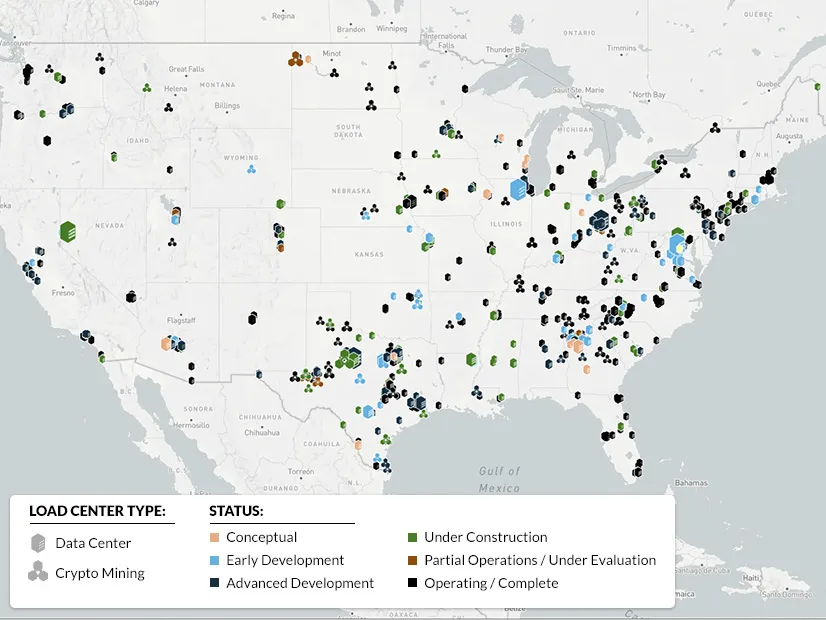
Multiple cloud and data center companies listed permitting or energy policy in their lobbying registrations. Permitting bottlenecks directly affect how fast a company can bring compute capacity online, which affects revenue, contract delivery, and financing covenants.
Tax treatment
Virginia's data center sales tax exemption costs the state over a billion dollars in potential tax revenue annually. When the exemption was created in 2008, the state projected a fraction of that. The actual figure exceeded the original estimate by more than 100,000%.
Virginia data center tax exemption: 2008 projection vs 2026 reality [5]Virginia Public Access Project (VPAP), state lobbying registrations and campaign contribution data, 2025-2026 cyclehttps://www.vpap.org/
In 2026, the Virginia Senate proposed eliminating the exemption entirely by 2027, eight years early. The House proposed keeping it through 2035 but attaching clean energy requirements. The governor warned against "going back on commitments Virginia has made to businesses." The regular session ended without a budget. A special session is set for April 23, 2026.
Virginia is not alone. Illinois suspended data center tax incentives for two years effective July 2026. Georgia introduced a bill to repeal its sales tax exemption. South Dakota proposed prohibiting data center tax incentives outright. Nebraska moved to eliminate personal property tax exemptions.
States moving against data center tax incentives in 2026
2-year freeze
Governor Pritzker announced suspension of data center tax incentives effective July 1, 2026.
Exemption eliminated
HB 7031 eliminated sales tax exemption for data centers under 100 MW, effective August 2025. No grandfathering.
May end 8 years early
$1.6B/yr exemption scheduled through 2035. Senate proposed elimination by 2027. Special session April 23, 2026.
Repeal proposed
SB 410 would repeal sales tax exemption. State auditors found 70% of construction would happen without it.
Full prohibition proposed
SB 135, sponsored by Senate President Pro Tem Karr, would prohibit tax incentives to data centers outright.
Exemption repeal proposed
LB 1131 would eliminate personal property tax exemptions for data centers.
At the federal level, the  Data Center Coalition's lobbying covers "tax and trade policy" as a core issue area. If states start pulling incentives, the industry will seek federal tax treatment to replace them.
Community and environmental rules
Lobbying registrations in this area cover everything from environmental regulations for data center developments to water use and energy policy. The Data Center Coalition lists both "water use policy" and "environmental policy" in its filings.
Nuclear is entering the picture. Federal regulators are reviewing an environmental impact statement for a proposed four-reactor complex intended to provide dedicated power for AI and data center operations.
Cities are pushing back. Tulsa voted unanimously to pause data center construction for nine months. Denver proposed a yearlong moratorium. At least 19 Michigan towns have paused data center development. Moratorium bills have been introduced in 11 states in 2026.
Data center project value affected by local opposition [6]Data Center Watch, tracker of 142 activist groups across 24 states opposing data center projects (2024-2026)
Local opposition has real financial consequences. Trackers have identified 142 activist groups across 24 states organizing against data center projects. Virginia alone has 42 groups. [6]Data Center Watch, tracker of 142 activist groups across 24 states opposing data center projects (2024-2026)
Blocked projects include a $14 billion complex in Arizona (withdrawn May 2024), a $1.5 billion project in Missouri (blocked by zoning ordinance, October 2024), and a $1.3 billion project in Indiana (canceled June 2024).
Opposition is bipartisan: 55% of officials publicly opposing large projects are Republican, 45% Democrat.
Four types of organizations are lobbying on data centers
It's not just Big Tech. Utilities, construction contractors, and regional business coalitions are all filing on the same issues: grid upgrades, permitting speed, tax treatment, and energy policy. The common thread across nearly every filing is the phrase "data center" paired with "energy."
Not every filing reports a dollar amount. The totals below understate actual spend.
Lobbying spend by organization type mentioning data centers, 2025 [1]U.S. Senate Lobbying Disclosure Act database (lda.senate.gov), quarterly filings mentioning "data center" in specific lobbying issues, 2021-2025https://lda.senate.gov/filings/public/filing/search/
AI and cloud companies
Anthropic lobbied on AI framework policy, export controls, data center issues, and compute supply chains. [7]Anthropic 2025 lobbying disclosures (lda.senate.gov), including Q3 2025 in-house filing reporting $1,010,000 in expenses covering AI policy and data center issues
CoreWeave registered in late 2025, listing "data center development and artificial intelligence." [8]CoreWeave Q4 2025 lobbying disclosure, reporting $90,000 in lobbying income for data center development and AI
Foreign companies are filing too. Nebius, a Netherlands-based cloud company spun out of Yandex, registered in Q4 2025 to lobby on U.S. data center, energy, and federal permitting policy. [9]Nebius Group N.V. Q4 2025 lobbying disclosure, reporting $200,000 in lobbying income for data center and energy policy
AI and cloud company lobbying spend mentioning data centers, 2025 [1]U.S. Senate Lobbying Disclosure Act database (lda.senate.gov), quarterly filings mentioning "data center" in specific lobbying issues, 2021-2025https://lda.senate.gov/filings/public/filing/search/
Utilities
Major utilities filed on transmission reform, grid reliability, and data center load growth. Multiple utilities in different regions used the same generic language: "data center issues." [10]Duke Energy 2025 lobbying disclosures (lda.senate.gov), $8,720,000 in total expenses across filings mentioning data center issues [11]Exelon Business Services 2025 lobbying disclosures (lda.senate.gov), $1,430,000 in total expenses across filings mentioning data center issues [12]Lumen Technologies 2025 lobbying disclosures (lda.senate.gov), $3,160,000 in total expenses across filings mentioning data center connectivity for AI Data center load growth is now a standing federal issue for the utility sector.
Utility and telecom lobbying spend mentioning data centers, 2025 [1]U.S. Senate Lobbying Disclosure Act database (lda.senate.gov), quarterly filings mentioning "data center" in specific lobbying issues, 2021-2025https://lda.senate.gov/filings/public/filing/search/
Data center operators and developers
Operators and developers are registering on the same issues as the tech companies: energy policy, tax treatment, environmental regulations, and cybersecurity certifications.
Data center operator lobbying spend, 2025 [1]U.S. Senate Lobbying Disclosure Act database (lda.senate.gov), quarterly filings mentioning "data center" in specific lobbying issues, 2021-2025https://lda.senate.gov/filings/public/filing/search/
Trade associations and regional coalitions
The Data Center Coalition filed its Q4 2025 registration covering nine issue areas, from transmission and permitting to tax, trade, and water use policy.
Regional business coalitions across the Gulf South and construction contractor associations are filing on data center energy policy too. The contractors who build the grid now lobby on who gets to connect to it.
Trade association lobbying spend mentioning data centers, 2025 [1]U.S. Senate Lobbying Disclosure Act database (lda.senate.gov), quarterly filings mentioning "data center" in specific lobbying issues, 2021-2025https://lda.senate.gov/filings/public/filing/search/
The state-level fight is just as big
Federal lobbying disclosures are only half the picture. Every state maintains its own lobbying registration system, and the data center industry is running parallel campaigns in statehouses, utility commissions, and county boards.
Virginia
Over 600 data centers operate in Virginia. The state holds 13% of the world's computing capacity. The $1.6 billion annual sales tax exemption is the largest data center incentive in the country. [5]Virginia Public Access Project (VPAP), state lobbying registrations and campaign contribution data, 2025-2026 cyclehttps://www.vpap.org/ Data centers in Virginia don't pay state sales tax on equipment purchases: servers, cooling systems, networking gear.
At least 10 companies hired lobbyists for the 2025-2026 legislative cycle, including the Data Center Coalition, 
Google,
Microsoft, and
Meta.
Dominion Energy, Virginia's dominant utility, registered at least nine lobbyists across five firms in 2025-2026 and contributed $8.3 million to Virginia campaigns in 2025 alone.
The Data Center Coalition created a 501(c)(4) advocacy group that ran social media campaigns reaching millions of views and donated to dozens of state lawmakers.
The 2026 legislature considered 61 data center bills. Fifteen passed.
But there is local opposition. A $24.7 billion data center campus remains delayed by three lawsuits. In one Virginia town, voters removed all pro-data center council members in the November 2024 election.
Georgia
Georgia provided $474 million in data center tax exemptions in the fiscal year ending July 2025, projected to reach $2.5 billion for the year beginning July 2026. Over 200 data centers operate in the state. State auditors found 70% of construction would happen without the tax breaks. [13]Georgia Ethics Commission, lobbying disclosures and registration data, 2025. Georgia General Assembly SB 410, SB 408, SB 34, SB 421, HB 1012, HB 528, HB 559 (2026 session)
At least 15 lobbyists in Georgia simultaneously represent data center companies and the state's dominant utility. One lobbying firm represents both a $17 billion data center development and the utility building $16 billion in new infrastructure to serve it.
The 2026 session produced seven anti-data center bills covering everything from repealing the sales tax exemption to construction moratoriums and water disclosure requirements. Zero passed. Lobbying helped shut down every one. [13]Georgia Ethics Commission, lobbying disclosures and registration data, 2025. Georgia General Assembly SB 410, SB 408, SB 34, SB 421, HB 1012, HB 528, HB 559 (2026 session)
Georgia 2026 data center reform bills: 7 introduced, 0 passed
Texas
Big Tech lobbyist registrations in Texas are extensive, with the highest individual compensation brackets reaching $222,440-$333,660. [14]Texas Ethics Commission, lobbyist compensation reports and client registrations, 2025https://www.ethics.state.tx.us/
Meta created a PAC that spent $1.3 million on Texas primaries ahead of the March 2026 election, including roughly $500,000 on digital advertising for a single statewide race.
Meta has three AI data center projects in Texas, including a $10 billion center near El Paso.
California
Total AI company spending to influence California state politics in 2025: $39 million. Meta and
Google led, while
OpenAI and
Anthropic both filed for the first time. [15]California Secretary of State CAL-ACCESS database, AI and data center lobbying expenditures, 2025https://cal-access.sos.ca.gov/
The industry lobbied against ratepayer protection, water usage reporting, and energy consumption reporting bills. The governor signed a gutted version of the ratepayer bill that authorizes but does not mandate a study, and vetoed the water reporting bill.
PG&E reported a 40% jump in data center hookup requests, with 3.5 GW of data center capacity in the connection pipeline over five years. In Santa Clara, data centers consume 60% of the local municipal utility's power, which hiked rates by 5% to cover infrastructure costs.
California state lobbying spend, 2025 ($ millions) [15]California Secretary of State CAL-ACCESS database, AI and data center lobbying expenditures, 2025https://cal-access.sos.ca.gov/
Florida
Florida eliminated its sales tax exemption for data centers under 100 MW in June 2025, effective August 1. No grandfathering clause: older projects already certified under prior rules also lost eligibility. [16]Florida SB 484, passed Senate 31-6 and House 92-16 in March 2026; Florida HB 7031, eliminating sub-100 MW sales tax exemption, signed June 2025
A ratepayer protection bill passed both chambers in March 2026, requiring baseline tariffs that prevent cost-shifting to general ratepayers. [16]Florida SB 484, passed Senate 31-6 and House 92-16 in March 2026; Florida HB 7031, eliminating sub-100 MW sales tax exemption, signed June 2025
 FPL (Florida Power & Light) had a rate case approved in November 2025. An industry group, incorporated just eight days before filing to intervene in the rate case, represented unnamed data center developers who signed confidential agreements with the utility. The group's legitimacy was questioned, noting it was "only recently formed and its members are unknown."
FPL's approved rate hike of $7 billion means 12 million Floridians pay over $14/month more starting January 2026.  NextEra, FPL's parent company, announced a partnership with
 Google to develop data center campuses.
What this means for infrastructure investors
Deal models that assume stable tax incentives, fixed grid costs, or predictable permitting timelines are based on a policy environment that is actively shifting. Virginia's tax exemptions might end eight years early. FERC's rate allocation rules are still being written.
Utilities have more influence in state capitals and at the federal level than any tech company. The largest utility lobbying budgets dwarf most AI startups' government affairs spend. The outcomes will be shaped by utility and coalition dynamics, not just tech company budgets.
Four deadlines will shape the next quarter:
Policy deadlines shaping AI infrastructure in Q2-Q3 2026
References
- U.S. Senate Lobbying Disclosure Act database (lda.senate.gov), quarterly filings mentioning "data center" in specific lobbying issues, 2021-2025
- FERC Order 193 FERC 61,217 (December 2025), directing PJM to create new rules for co-located data center loads
- White House, "Ratepayer Protection Pledge" (March 4, 2026)
- Yes Energy (ICE), U.S. Data Center and Large Load Status Tracker
- Virginia Public Access Project (VPAP), state lobbying registrations and campaign contribution data, 2025-2026 cycle
- Data Center Watch, tracker of 142 activist groups across 24 states opposing data center projects (2024-2026)
- Anthropic 2025 lobbying disclosures (lda.senate.gov), including Q3 2025 in-house filing reporting $1,010,000 in expenses covering AI policy and data center issues
- CoreWeave Q4 2025 lobbying disclosure, reporting $90,000 in lobbying income for data center development and AI
- Nebius Group N.V. Q4 2025 lobbying disclosure, reporting $200,000 in lobbying income for data center and energy policy
- Duke Energy 2025 lobbying disclosures (lda.senate.gov), $8,720,000 in total expenses across filings mentioning data center issues
- Exelon Business Services 2025 lobbying disclosures (lda.senate.gov), $1,430,000 in total expenses across filings mentioning data center issues
- Lumen Technologies 2025 lobbying disclosures (lda.senate.gov), $3,160,000 in total expenses across filings mentioning data center connectivity for AI
- Georgia Ethics Commission, lobbying disclosures and registration data, 2025. Georgia General Assembly SB 410, SB 408, SB 34, SB 421, HB 1012, HB 528, HB 559 (2026 session)
- Texas Ethics Commission, lobbyist compensation reports and client registrations, 2025
- California Secretary of State CAL-ACCESS database, AI and data center lobbying expenditures, 2025
- Florida SB 484, passed Senate 31-6 and House 92-16 in March 2026; Florida HB 7031, eliminating sub-100 MW sales tax exemption, signed June 2025
Frequently Asked Questions
How much has data center lobbying grown?
Federal lobbying filings mentioning "data center" grew 7x between 2021 and 2025, from 42 to 298. Every lobbyist working on federal issues must register and file quarterly with the U.S. Senate Lobbying Disclosure Act database.
Who is lobbying on data center issues?
Four types of organizations are lobbying on data centers: AI and cloud companies (Anthropic, CoreWeave, Nebius), utilities (Duke Energy, Exelon, Lumen Technologies), data center operators and developers (Vantage, Lifeline, IDM Companies), and trade associations and regional coalitions (Data Center Coalition, Gulf South Business Roundtable, Power and Communication Contractors Association). The common thread across nearly every filing is the phrase "data center" paired with "energy."
What are the four policy fights in data center lobbying?
The lobbying issues cluster into four policy fights: who pays for grid upgrades (FERC directed PJM to create new rules for co-located data center loads), permitting speed (DOE directed FERC to initiate rulemaking on large loads over 20 MW with an April 30, 2026 deadline), tax treatment (Virginia's data center sales tax exemption loses the state $1.6 billion annually), and community and environmental rules (moratorium bills introduced in 11 states, 14 bills total, in 2026).
Which states have the most data center lobbying activity?
Virginia, Georgia, Texas, California, and Florida are running parallel lobbying campaigns over tax exemptions, rate cases, and potential moratoriums. Over 600 data centers operate in Virginia, which holds 13% of the world's computing capacity. Georgia provided $474 million in data center tax exemptions in the fiscal year ending July 2025. Total AI company spending to influence California state politics in 2025: $39 million.
How much data center investment has local opposition blocked?
Local opposition has blocked or delayed $64 billion in projects across 24 states. Data Center Watch tracked 142 activist groups across 24 states organizing against data center projects. Virginia alone has 42 groups. Opposition is bipartisan: 55% of officials publicly opposing large projects are Republican, 45% Democrat.
What does data center lobbying mean for infrastructure investors?
Deal models that assume stable tax incentives, fixed grid costs, or predictable permitting timelines are based on a policy environment that is actively shifting. Virginia's tax exemptions might end eight years early. FERC's rate allocation rules are still being written. Utilities have more influence in state capitals and at the federal level than any tech company.
We help emerging neoclouds find financing partners, and help financing partners enhance story credit with GPU collateral management and residual value insurance solutions.
Learn how it works →